Exchange fees compound rapidly at scale. A trader executing $500,000 in monthly volume pays between $500 and $2,000 in fees depending on venue selection and tier structure. This article maps the core fee models across centralized and decentralized exchanges, explains the variables that drive effective cost, and provides a decision framework for minimizing transaction expenses.
Fee Components and Terminology
Most centralized exchanges charge two types of trading fees: maker fees for limit orders that add liquidity to the order book, and taker fees for market orders that remove liquidity. Maker fees typically run 30 to 50 percent lower than taker fees to incentivize order book depth.
Volume tiers reduce fees as 30 day rolling volume increases. A typical structure might start at 0.10 percent taker and 0.08 percent maker for retail users, then drop to 0.02 percent taker and zero percent maker at $50 million in monthly volume. Native token holdings sometimes provide additional discounts, often 10 to 25 percent off standard rates.
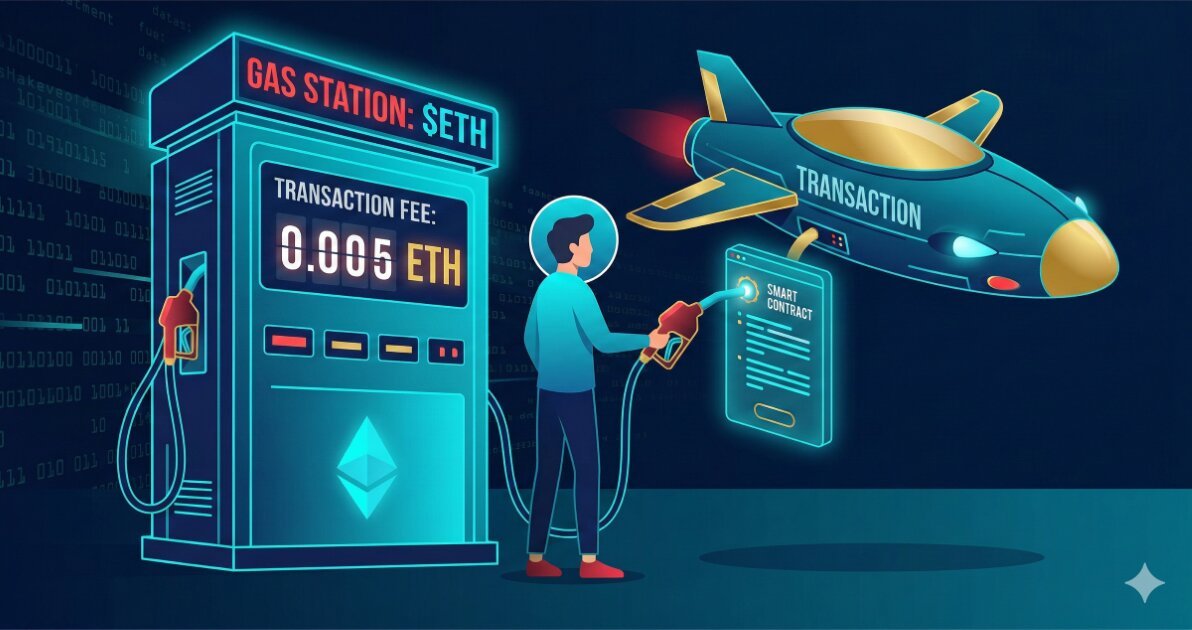
Decentralized exchanges replace maker and taker fees with liquidity provider fees, typically 0.05 to 0.30 percent per swap depending on the pool. You also pay network gas fees, which vary by blockchain and network congestion. On Ethereum mainnet during periods of high activity, gas costs can exceed the swap fee for trades under $5,000.
Withdrawal fees are fixed per asset and per network. Moving 1 BTC from an exchange might cost 0.0005 BTC regardless of whether you hold 1 BTC or 100 BTC. These fees do not scale with value, making them proportionally expensive for smaller withdrawals but negligible for larger ones.
Centralized Exchange Fee Structures
Binance operates one of the lowest base fee schedules among major centralized venues. Standard spot trading fees begin at 0.10 percent maker and taker. Holding BNB and enabling payment with BNB reduces fees by 25 percent, bringing the effective rate to 0.075 percent. Volume tiers descend to 0.02 percent maker and 0.04 percent taker at approximately $10 million in 30 day volume.
Kraken uses a similar tier structure but starts higher at 0.16 percent maker and 0.26 percent taker for low volume users. The rate drops to 0.10 percent maker and 0.20 percent taker at $50,000 in monthly volume. Kraken Pro offers tighter spreads and better execution than the consumer interface but uses the same fee schedule.
Coinbase charges among the highest fees in the industry. The standard trading interface applies a spread markup of approximately 0.50 percent plus a variable fee. Coinbase Advanced (formerly Coinbase Pro) reduces this to 0.40 percent taker and 0.60 percent maker for users under $10,000 in volume, improving to 0.05 percent taker and zero maker above $500 million in volume.
OKX and Bybit compete for high volume traders with aggressive tier structures. Both offer zero percent maker fees at volume thresholds between $50 million and $100 million monthly, and taker fees below 0.02 percent. These venues also provide additional rebates for market makers who maintain tight spreads and high uptime.
Gemini starts at 0.35 percent for users under $500 in 30 day volume and descends to 0.20 percent at $10,000 in volume. The fee schedule remains relatively expensive compared to Binance or Kraken until you reach institutional volumes above $10 million monthly.
Decentralized Exchange Cost Dynamics
Uniswap charges 0.05 percent, 0.30 percent, or 1.00 percent per swap depending on pool configuration. Stablecoin pairs typically use 0.05 percent pools. Volatile pairs use 0.30 percent pools. Exotic or low liquidity pairs use 1.00 percent pools. The protocol does not charge additional platform fees on top of liquidity provider fees.
Ethereum gas costs for Uniswap swaps range from $5 to $50 depending on network congestion and complexity (single hop swaps cost less than multi hop routes). Layer 2 solutions like Arbitrum or Optimism reduce gas fees to $0.50 to $2.00 per transaction while maintaining Uniswap interface compatibility.
Curve Finance specializes in stablecoin and pegged asset swaps with fees between 0.04 percent and 0.40 percent, typically clustering around 0.04 to 0.10 percent for major stablecoin pairs. Gas costs remain similar to Uniswap. The lower swap fees make Curve more cost effective than centralized exchanges for large stablecoin conversions when gas costs are amortized over transaction size.
GMX charges 0.10 percent for swaps and 0.10 percent for opening or closing perpetual positions. Gas costs on Arbitrum remain under $1.00 per transaction. This structure makes GMX competitive with centralized derivatives platforms for users trading perpetuals.
Worked Example: Cost Comparison Across Venues
Consider a trader executing $100,000 in monthly spot volume with typical patterns: 60 percent market orders (taker) and 40 percent limit orders (maker).
On Binance with BNB discount:
– Taker: $60,000 × 0.075% = $45
– Maker: $40,000 × 0.075% = $30
– Total: $75
On Coinbase Advanced:
– Taker: $60,000 × 0.40% = $240
– Maker: $40,000 × 0.60% = $240
– Total: $480
On Uniswap via Arbitrum (assuming 0.30 percent pool and $1.00 gas per trade, 50 trades monthly):
– Swap fees: $100,000 × 0.30% = $300
– Gas: 50 × $1.00 = $50
– Total: $350
The cost delta between Binance and Coinbase Advanced reaches $405 monthly at this volume level, or $4,860 annually. Uniswap sits between them but requires selfcustody and bears smart contract risk.
At $1 million monthly volume with 80 percent taker and 20 percent maker:
Binance with BNB at tier 2 (approximately 0.06% taker, 0.04% maker):
– Taker: $800,000 × 0.06% = $480
– Maker: $200,000 × 0.04% = $80
– Total: $560
Kraken at tier 3 (0.08% taker, 0.06% maker):
– Taker: $800,000 × 0.08% = $640
– Maker: $200,000 × 0.06% = $120
– Total: $760
The gap narrows as volume increases, but fee savings still reach $2,400 annually.
Common Mistakes and Misconfigurations
Ignoring withdrawal fee economics. Users frequently make small withdrawals that cost 0.50 to 2.00 percent in withdrawal fees. Batch withdrawals monthly instead of weekly to reduce proportional cost.
Missing volume tier thresholds by narrow margins. A trader at $49,000 in monthly volume pays significantly more than one at $51,000 if the tier breaks at $50,000. Monitor rolling volume and consider concentrating activity when close to breakpoints.
Paying for convenience trades with market orders. Market orders incur taker fees and often poor execution due to slippage. Place limit orders at or near market price to capture maker rebates and better fills.
Overlooking token holding discounts. Native token discounts (BNB on Binance, OKB on OKX) provide 10 to 25 percent fee reductions. Calculate the breakeven holding amount based on monthly fees.
Using retail interfaces instead of advanced platforms. Coinbase standard charges roughly 10x more than Coinbase Advanced. Gemini Active Trader costs less than basic Gemini. Always verify you are using the venue’s lowest fee interface.
Underestimating gas cost impact on small DEX trades. A $500 swap on Ethereum mainnet with $30 in gas costs and $1.50 in swap fees means gas represents 95 percent of total cost. Use Layer 2 solutions for trades under $10,000.
What to Verify Before Relying on This
- Current fee schedules for your target exchanges, as venues adjust rates quarterly or when competing for market share
- Your actual 30 day rolling volume and projected volume for the next tier
- Withdrawal fee schedules for specific assets and networks you plan to use
- Token holding requirements and current discount percentages for native token fee reductions
- Maker versus taker execution rates in your trading pattern (check historical order data)
- Gas costs on your preferred networks at typical congestion levels
- Regional restrictions that might limit access to lowest fee venues
- Stablecoin pair availability if you trade primarily against USDT or USDC rather than BTC or ETH
- API rate limits and fee structures if you use algorithmic trading
- Margin and derivatives fees if you trade leveraged products (spot fee schedules do not apply)
Next Steps
- Export your last 90 days of trading data from current venues and calculate total fees paid across maker, taker, and withdrawal categories.
- Model the same activity against fee schedules from three alternative venues, including native token discounts and volume tier eligibility.
- For DEX usage, calculate the trade size where gas costs drop below 1 percent of transaction value on your target network and limit smaller trades to centralized venues or Layer 2 solutions.
Category: Crypto Exchanges