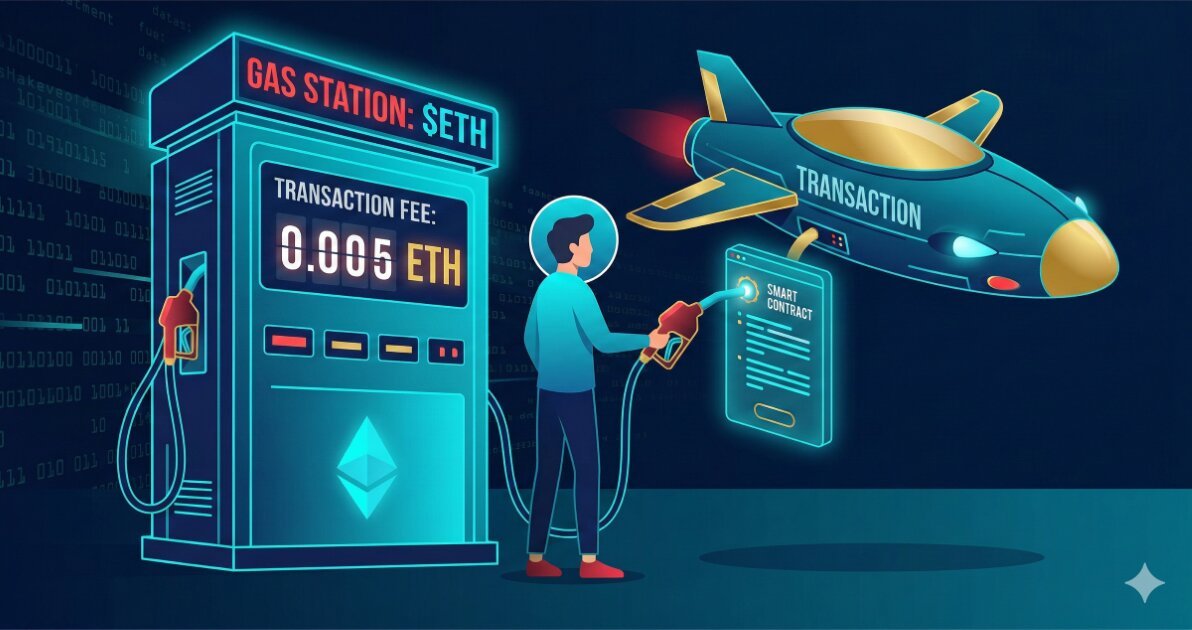
Choosing a crypto trading platform means evaluating exchange infrastructure, custody models, liquidity routing, and regulatory posture. Unlike legacy broker networks where execution venues are standardized, crypto platforms vary widely in onchain settlement, API rate limits, margin collateral schemes, and whether private keys ever touch your device. This article covers the technical decision points that separate consumer grade exchanges from platforms that support systematic trading, tax automation, and noncustodial workflows.
Custody Models and Key Management
Platforms fall into three custody architectures. Centralized exchanges hold private keys in multisig or hardware security module configurations. You deposit funds to an omnibus wallet; the exchange credits your account in an internal ledger. Trades settle instantly within that ledger. Withdrawals require the exchange to sign an onchain transaction, subject to hot wallet limits and withdrawal queues during congestion.
Noncustodial exchanges never take possession of your keys. You sign every transaction client side, either through a browser wallet or hardware signer. Trades execute as smart contract calls. Slippage, gas costs, and settlement finality are your responsibility. No platform can freeze your account, but you bear the full MEV and front running surface.
Hybrid custody platforms use account abstraction or threshold signature schemes to split key material. The platform holds one shard, you hold another. Neither party can move funds unilaterally. This model reduces exchange risk without forcing you to manage gas or approve every swap onchain.
Liquidity Sources and Routing
Centralized platforms quote from their own order books. Depth depends on market maker incentives, maker rebates, and the platform’s share of retail or institutional flow. Large platforms may internalize 70 to 90 percent of retail order flow, crossing buys and sells without touching an external venue.
DEX aggregators query multiple automated market makers and order book DEXs, then route your trade across the path with minimal price impact. Routing algorithms account for gas costs per hop. A four hop route through Uniswap, Curve, and Balancer may offer better net execution than a single pool if gas is low and liquidity is fragmented. Aggregators typically charge a small protocol fee, either as basis points on notional or a fixed fee per transaction.
Some centralized platforms now route to external liquidity when internal depth is insufficient. This hybrid model treats the platform’s order book as one venue among many. You see a single quote, but execution may touch three or four liquidity sources behind the API.
Fee Structures and Maker Incentives
Tiered fee schedules reward volume. A retail trader might pay 0.20 percent per side; an account doing $10 million in 30 day volume might pay 0.04 percent. Maker rebates further reduce effective fees if you provide liquidity by posting limit orders that rest on the book. The rebate typically ranges from zero to 0.02 percent.
Gas fees on DEXs are independent of trade size. A $100 swap and a $100,000 swap pay the same gas if they touch the same number of pools. This makes DEXs expensive for small trades and relatively cheap for large ones, assuming slippage is manageable. Some platforms subsidize gas by batching user transactions or deploying on rollups where the L2 fee is a fraction of mainnet cost.
Withdrawal fees on centralized platforms are either flat or tiered by asset. Bitcoin withdrawals might cost 0.0001 BTC; ERC20 withdrawals might cost $5 to $25 depending on mainnet gas at the time the platform batches transactions. Confirm whether the platform dynamically adjusts withdrawal fees or uses a static schedule that lags gas price changes.
API Access and Rate Limits
Public REST endpoints return order book snapshots, recent trades, and ticker data. Rate limits typically range from 1,200 to 6,000 requests per minute per IP. WebSocket feeds offer real time order book deltas and trade streams without polling. Subscribing to multiple symbols over a single WebSocket connection is standard.
Authenticated endpoints for order placement, cancellation, and account queries impose stricter limits, often 100 to 300 requests per minute per API key. Bulk order endpoints let you place or cancel up to 10 or 20 orders in a single call, reducing round trips. Some platforms apply secondary limits based on order message rate: placing 1,000 orders per second, even if under the request limit, may trigger throttling.
FIX protocol support is rare outside institutional facing platforms. If you need FIX, confirm whether the platform offers native FIX or requires a third party gateway that translates REST to FIX.
Margin and Collateral Mechanics
Cross margin platforms pool collateral across all positions. Your entire account balance backs every open position. Liquidation occurs when account equity falls below the maintenance margin threshold, typically 3 to 10 percent of position notional. The platform closes all positions simultaneously.
Isolated margin dedicates collateral to a single position. Liquidation affects only that position. This limits contagion but requires you to monitor margin usage per position. Some platforms let you transfer collateral between isolated positions manually or via API.
Collateral valuation varies. Some platforms accept only stablecoins or the base asset as margin. Others accept a basket of assets with per asset haircuts. A haircut of 0.85 means $1,000 of that asset counts as $850 of collateral. Haircuts adjust during volatility. Confirm how often the platform recalculates haircuts and whether you receive advance notice.
Worked Example: Routing a Large Stable Swap
You want to swap $500,000 USDC to DAI. A centralized exchange shows 0.05 percent taker fee, $250 in fees. The order book has $200,000 at best bid, $300,000 in the next three levels. You’ll pay taker on all levels, with minor slippage as you walk the book.
A DEX aggregator quotes a route through Curve’s 3pool and a secondary Balancer pool. Gas estimate: $8. Slippage tolerance set to 0.1 percent. The aggregator splits the order: $400,000 through Curve, $100,000 through Balancer. Effective fee is $8 plus roughly $50 in price impact. Net cost: $58 versus $250 on the centralized exchange.
If you hold the CEX’s native token for a fee discount, the centralized fee drops to $125. The DEX still wins, but the margin narrows. You also avoid withdrawal wait times and retain custody throughout the swap.
Common Mistakes and Misconfigurations
- Setting slippage tolerance too low on DEX trades during volatility. The transaction reverts, you pay gas for nothing, and the price moves further against you.
- Assuming maker rebates apply to iceberg or hidden orders. Many platforms exclude hidden liquidity from rebate calculations.
- Using cross margin without monitoring correlated positions. A single adverse move liquidates your entire portfolio if assets correlate.
- Ignoring API rate limit headers. Platforms return current usage in response headers; exceeding limits results in temporary bans that can last minutes to hours.
- Trusting stale order book snapshots from REST endpoints. Snapshots may be 100 to 500 milliseconds old. Use WebSocket feeds for anything latency sensitive.
- Not verifying smart contract addresses before approving token spending limits on DEXs. Phishing sites replicate DEX frontends with malicious contract addresses.
What to Verify Before You Rely on This
- Current fee schedule for your expected 30 day volume tier. Tiers reset monthly or use rolling windows.
- Whether the platform rehypothecates user deposits for its own trading or lending. Some disclose this in terms; others do not.
- Withdrawal processing time and whether withdrawals batch at fixed intervals or process on demand.
- API rate limits for both public and authenticated endpoints. Test limits in a sandbox if available.
- Collateral haircut schedule and how often haircuts update. Check whether the platform publishes a public haircut API.
- Insurance fund size and coverage scope. Some funds cover only liquidation failures, not platform insolvency.
- Regulatory licenses in your jurisdiction. Some platforms restrict services by IP geolocation.
- Historical uptime during high volatility. Platforms that halt trading during crashes increase liquidation risk.
- Margin call and liquidation notification mechanisms. Confirm whether the platform sends email, SMS, or webhook alerts.
- DEX smart contract audit history. Look for audits by Trail of Bits, OpenZeppelin, or equivalent firms, and verify audit dates.
Next Steps
- Deploy API credentials with IP whitelisting and read only permissions first. Test order placement on testnet or with minimal capital before scaling.
- Monitor WebSocket message latency and dropped connection rates. Implement reconnect logic with exponential backoff.
- Build a collateral monitoring dashboard if trading on margin. Track real time margin usage, haircut changes, and distance to liquidation.
Category: Crypto Exchanges