Crypto exchanges span a wide architectural spectrum, from fully custodial orderbook venues to noncustodial automated market makers, each with distinct trade execution mechanics, counterparty risk profiles, and operational requirements. Selecting the appropriate exchange type depends on your priorities: latency sensitivity, custody preferences, capital efficiency, liquidity depth, regulatory exposure, and the specific assets you need to access. This article maps exchange architectures to their mechanical trade offs and outlines verification steps for practitioners routing orders or integrating with exchange infrastructure.
Centralized Exchange Architecture and Custody Model
Centralized exchanges (CEXs) operate a traditional orderbook model where the venue takes custody of deposited assets, maintains internal account balances in a proprietary database, and matches orders through a central limit order book (CLOB). Settlement happens within the exchange’s ledger, not onchain. Only deposits and withdrawals touch the blockchain.
This design delivers low latency execution, typically single digit millisecond order matching, and deep liquidity pools aggregated from thousands of simultaneous users. Order types include limit, market, stop loss, iceberg, and post only. Fee structures vary but commonly follow a maker taker model where liquidity providers receive rebates and liquidity takers pay a premium.
The custody trade off is material. You trust the exchange to hold your private keys, maintain segregated reserves, and honor withdrawal requests. Historical failures include insolvency events where user deposits were lent out, used for proprietary trading, or simply misappropriated. The Merkle tree proof of reserves mechanism, adopted by some exchanges post 2022, provides snapshots of exchange held assets but does not guarantee solvency (liabilities may exceed assets) or real time accuracy.
Regulatory oversight varies by jurisdiction. Exchanges licensed in specific territories must comply with KYC, AML, reporting, and capital adequacy rules. Unlicensed venues operate without these constraints but carry corresponding legal and operational risk.
Decentralized Exchange Liquidity Models
Decentralized exchanges (DEXs) execute trades onchain through smart contracts, eliminating custodial intermediaries. Two primary liquidity models dominate: automated market makers (AMMs) and onchain orderbooks.
AMMs such as Uniswap and Curve use liquidity pools where users deposit token pairs into smart contracts. Prices adjust algorithmically based on the pool’s token ratio, following a constant product formula (x times y equals k) or more sophisticated curves for stablecoin or correlated asset pairs. Traders execute swaps directly against the pool, paying a protocol fee that accrues to liquidity providers.
This model introduces impermanent loss, the opportunity cost liquidity providers incur when pool token ratios diverge from external market prices. If you deposit equal value ETH and USDC into a pool, and ETH doubles in price, arbitrageurs will rebalance the pool by buying the now underpriced ETH and selling USDC, leaving you with less ETH than you would have held passively. The magnitude depends on price volatility and the time your liquidity remains deployed.
Onchain orderbooks, implemented by dYdX (v3 used a hybrid model, v4 is fully decentralized) and Serum, replicate the CLOB model in smart contracts. Orders post to the blockchain, matching happens onchain, and settlement is atomic. This preserves the limit order semantics traders expect from CEXs but introduces higher latency (block time constraints) and gas costs for order placement and cancellation.
Hybrid Models and Rollup Based Exchanges
Hybrid exchanges attempt to combine custodial efficiency with noncustodial security. Common patterns include:
Custodial trading, noncustodial settlement: Users deposit into smart contracts that lock funds. The exchange operates an offchain matching engine for speed but settlement occurs onchain periodically or on demand. If the exchange fails to honor matched trades, users retain access to their deposited collateral.
Layer 2 and rollup exchanges: dYdX v4, Loopring, and others use validity rollups (zkRollups) or optimistic rollups to batch transactions offchain and post cryptographic proofs or fraud proofs to Ethereum. This reduces per trade gas costs and increases throughput while inheriting Ethereum’s security guarantees. Users maintain withdrawal rights even if the rollup operator disappears.
Gas efficiency varies significantly. zkSync and StarkNet based DEXs can process thousands of trades per second with per transaction costs below one cent, compared to mainnet Ethereum where a single swap might cost dollars during network congestion.
Cross Venue Liquidity Fragmentation and Aggregation
Liquidity is fragmented across hundreds of venues. A token may trade on multiple CEXs with differing orderbook depth, and simultaneously have liquidity pools on several DEX protocols. Price discrepancies create arbitrage opportunities, but also complicate best execution.
DEX aggregators like 1inch and Matcha query multiple liquidity sources in parallel, split orders across venues, and route through the path with optimal pricing after accounting for gas costs and slippage. The aggregator’s smart contract executes the multi hop swap atomically: either the entire route succeeds or the transaction reverts, preventing partial fills at unfavorable prices.
Slippage tolerance settings control the maximum acceptable price deviation between quote time and execution. Setting tolerance too tight causes transactions to fail if prices move slightly. Setting it too loose exposes you to frontrunning: bots observe your pending transaction in the mempool, submit higher gas transactions to trade ahead of you, and extract value through price manipulation.
Worked Example: Routing a Large Cap Altcoin Swap
You need to swap 500,000 USDC for a large cap altcoin, available on both a centralized exchange with 10 million USD orderbook depth and a Uniswap v3 pool with 3 million USD liquidity.
On the CEX: The orderbook spreads your 500k buy across 15 limit orders at incrementally higher prices. Average execution price is 0.8% worse than mid market. Total fees: 0.1% taker fee on 500k equals 500 USD. Settlement is instant in the exchange database. Withdrawal to your wallet incurs a fixed network fee (varies by token and network) and a 24 to 48 hour security delay.
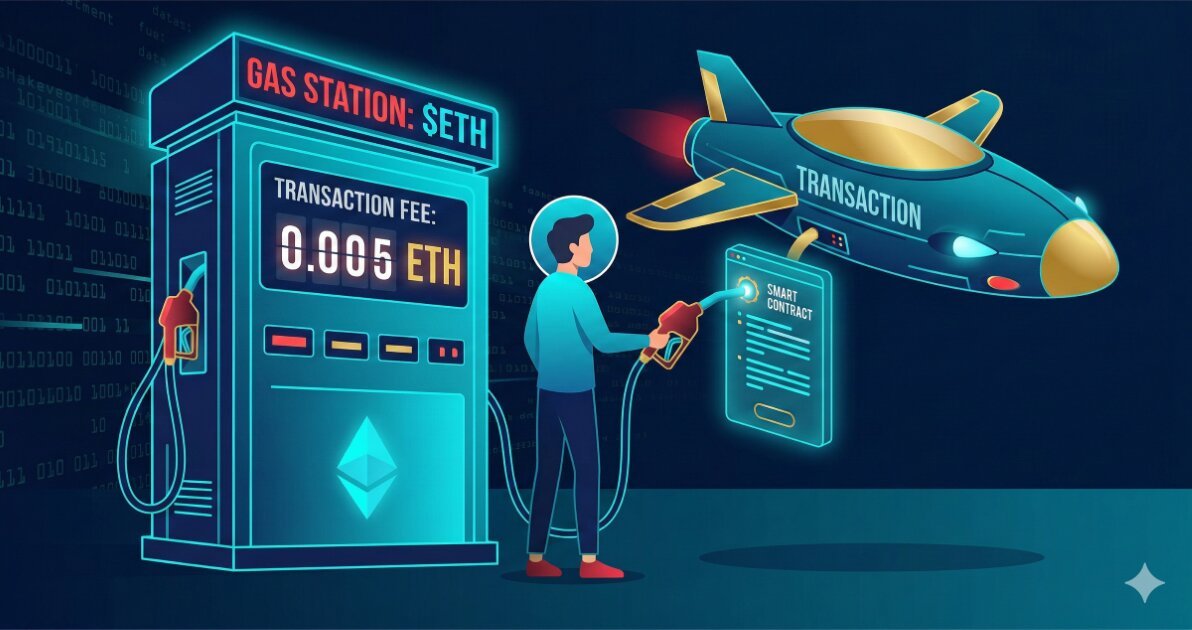
On Uniswap: The pool’s constant product formula calculates price impact. A 500k swap against 3 million liquidity moves the price significantly. Approximate impact: 8% slippage (this varies based on the pool’s token ratio and fee tier). Protocol fee: 0.3% or 1,500 USD. Gas cost: approximately 0.01 to 0.05 ETH depending on network congestion. Tokens arrive in your wallet within seconds, no withdrawal delay.
The CEX offers tighter execution but requires deposit time, custodial risk, and withdrawal friction. The DEX is immediate and noncustodial but less capital efficient for this size. A DEX aggregator might split the order: 300k via the CEX (after factoring deposit time) and 200k across multiple DEX pools to minimize combined slippage and fees.
Common Mistakes and Misconfigurations
Ignoring gas price dynamics when comparing DEX costs: A swap that costs 50 USD in gas during peak hours might cost 5 USD at 3 AM UTC. Quoted DEX fees exclude gas, distorting total cost comparisons.
Assuming proof of reserves equals solvency: Merkle proofs confirm asset holdings at a snapshot but reveal nothing about liabilities. An exchange can prove it holds user deposits while simultaneously owing more than it possesses.
Using maximum slippage as a fixed percentage across all token pairs: Stablecoin swaps tolerate sub 0.1% slippage. Volatile low liquidity tokens may require 5% or more. Uniform settings cause unnecessary reverts or value leakage.
Leaving large balances on exchanges with API keys enabled: Compromised API keys allow programmatic withdrawals. Even with withdrawal whitelist protection, attackers can trade your balance into illiquid tokens and manipulate prices.
Treating all DEX pools as equally safe: Unverified smart contracts, rugpull tokens with hidden mint functions, and pools with manipulated reserves exist. Verify contract audits and check liquidity depth and holder distribution before trading.
Underestimating rollup withdrawal delays: Optimistic rollups impose a challenge period, typically seven days, for withdrawals to Layer 1. Validity rollups are faster but still require proof generation and submission. Factor this latency into liquidity planning.
What to Verify Before Execution
- Current maker taker fee schedule and volume tier thresholds on your chosen CEX
- Exchange’s proof of reserves publication frequency and auditor credibility
- Smart contract audit reports and known vulnerabilities for DEX protocols you access
- Liquidity depth in the specific trading pair, not just total value locked across the protocol
- Slippage tolerance appropriate for current market volatility and your trade size
- Gas price at intended execution time using mempool monitoring tools
- Withdrawal processing time and any security holds on new deposits
- Jurisdictional licensing status if regulatory compliance matters to your operations
- API rate limits and websocket feed latency if integrating programmatically
- Insurance fund size or protocol backstop mechanisms in case of platform insolvency
Next Steps
- Benchmark execution quality across three venues for your most frequent trading pairs, measuring total cost including fees, slippage, and gas over 20 transactions.
- Implement a withdrawal schedule that minimizes custodial exposure: move funds off CEXs weekly or after trades settle, and store only active trading capital onchain.
- Set up monitoring for exchange reserve addresses and protocol TVL changes using onchain analytics tools, creating alerts for unusual outflows or liquidity drops that precede platform stress events.
Category: Crypto Exchanges