Decentralized exchanges (DEXs) allow traders to swap tokens directly from their wallets through smart contracts, removing the need for custodial intermediaries. The design choices underlying DEX architectures govern capital efficiency, execution quality, oracle dependency, and where points of failure actually sit. This article examines the core execution models, mechanical trade-offs, and configuration decisions practitioners face when routing trades or integrating DEX infrastructure.
Automated Market Maker Mechanics
Most DEX volume flows through constant function market makers that hold token pairs in liquidity pools. The constant product formula x × y = k governs pricing: as a trader removes token X from the pool, the smart contract increases the price of X proportionally to maintain the invariant. No order book exists; the price curve is continuous and deterministic.
Liquidity providers deposit equal values of both tokens into the pool and receive LP tokens representing their share. Providers earn a percentage of each swap (commonly 0.30% but configurable per pool), paid in the tokens being traded. Impermanent loss occurs when the price ratio diverges from the deposit ratio. A provider who deposits equal dollar values of ETH and USDC at 2,000 USD per ETH will hold fewer ETH and more USDC if ETH rises to 3,000 USD. The loss becomes permanent only when the provider withdraws; if the ratio returns to the original level before withdrawal, the loss disappears.
Concentrated liquidity models allow providers to allocate capital within specific price ranges rather than across the entire curve. A provider might supply USDC and USDT liquidity only between 0.99 and 1.01, earning higher fees per dollar when trades occur in that band but earning nothing outside it. This design multiplies capital efficiency but requires active range management.
Order Routing and Price Impact
Price impact measures how much a trade moves the pool price. For a constant product pool, impact scales nonlinearly with trade size relative to pool depth. A swap of 1% of pool reserves typically moves the price by roughly 1%, while a 10% swap moves it closer to 11%.
Aggregators split large orders across multiple DEXs and liquidity sources to minimize total price impact. A 50 ETH sell might be divided into 20 ETH through one AMM pool, 15 ETH through a second pool with better depth at that price, and 15 ETH through a third route. The aggregator computes the optimal split by modeling the marginal cost of each incremental unit across all available venues.
Slippage tolerance sets the maximum acceptable price deviation between quote and execution. A trade quoted at 2,000 DAI per ETH with 0.5% slippage will revert if the actual execution price exceeds 2,010 DAI. Tight tolerances protect against front running but increase reversion risk during volatile periods when legitimate price movement triggers the check.
Oracle Dependency and Manipulation Vectors
DEXs that serve as price feeds for other protocols introduce oracle risk. A lending protocol that uses a single DEX pool to value collateral can be exploited if an attacker manipulates that pool with a flash loan. The attacker borrows a large amount of one token, swaps it to distort the pool price, triggers a liquidation or borrow against the manipulated price, then reverses the swap within the same transaction.
Time weighted average price (TWAP) oracles sample the cumulative price at the start and end of a window, then divide by elapsed time. A protocol might use a 10 minute TWAP, storing the cumulative price state every block and computing the average over the last 600 seconds when a price is requested. TWAP resists intrablock manipulation but remains vulnerable to sustained manipulation over the averaging window if the cost to distort the price is less than the exploit profit.
Chainlink and other external oracles aggregate offchain price data and write it onchain through separate contracts. Protocols that rely on external oracles for pricing but use DEX pools for execution avoid circular dependency but introduce reliance on oracle uptime and update frequency.
Gas Costs and Execution Latency
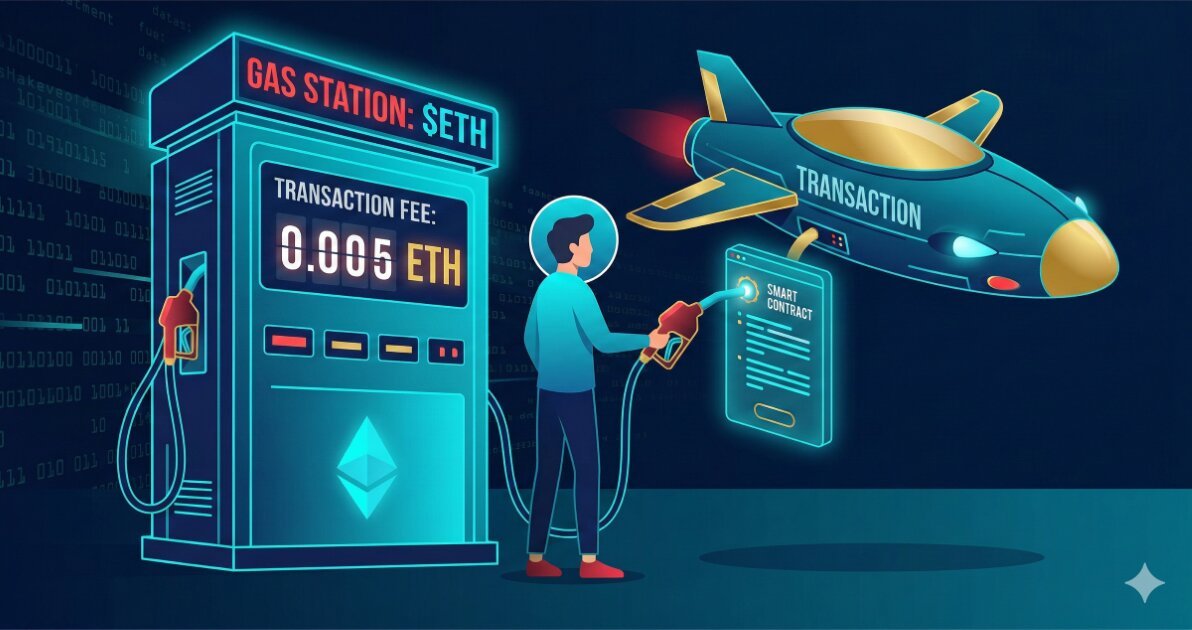
Swapping through an AMM typically consumes 100,000 to 150,000 gas for a basic token pair and 200,000 to 400,000 gas for aggregated routes that touch multiple pools. At 50 gwei base fee and 2,000 USD per ETH, a simple swap costs 10 to 30 USD in gas, making small trades economically unviable on Ethereum mainnet.
Layer 2 networks reduce gas costs by one to two orders of magnitude by batching transactions offchain and posting compressed proofs to mainnet. Optimistic rollups finalize withdrawals back to mainnet after a 7 day challenge period, while ZK rollups finalize once the validity proof is verified onchain.
Crosschain DEXs add bridge latency and additional failure modes. A swap that bridges USDC from Ethereum to Arbitrum, swaps to ETH on Arbitrum, then bridges ETH back to Ethereum introduces three distinct transaction sets, each with separate gas costs and potential reversion points. Bridge exploits have historically been the largest single category of DeFi losses by dollar value.
Worked Example: Multi-Hop Swap Execution
A trader wants to convert 10,000 USDC to LINK but no deep USDC/LINK pool exists. The aggregator identifies two viable routes: (1) USDC → WETH → LINK and (2) USDC → DAI → WETH → LINK.
The aggregator queries each pool:
– USDC/WETH pool: 5M USDC, 2,500 WETH (k = 12.5B)
– WETH/LINK pool: 1,000 WETH, 150,000 LINK (k = 150M)
– USDC/DAI pool: 20M USDC, 20M DAI (k = 400M²)
– DAI/WETH pool: 8M DAI, 4,000 WETH (k = 32B)
Route 1: Swapping 10,000 USDC into the USDC/WETH pool yields approximately 4.999 WETH (input / reserves ratio causes 0.02% price impact). Swapping 4.999 WETH into WETH/LINK yields roughly 749 LINK (0.50% impact). After 0.30% fees at each hop, the trader receives approximately 744 LINK.
Route 2: The USDC/DAI swap incurs minimal impact due to large reserves. The subsequent hops face similar dynamics to route 1 but accumulate an additional fee tier. Total output: approximately 740 LINK.
The aggregator selects route 1 and submits the transaction with a 0.5% slippage tolerance, accepting any output above 740.28 LINK. The transaction costs approximately 250,000 gas for the two pool interactions plus routing logic.
Common Mistakes and Misconfigurations
-
Approving unlimited token spend: Many front ends request infinite approval for router contracts. If the router is upgraded maliciously or exploited, all approved tokens are at risk. Approve only the amount needed for immediate trades.
-
Ignoring pool TVL relative to trade size: Executing a 50,000 USD swap through a 200,000 USD TVL pool generates massive slippage. Always check pool depth, not just token availability.
-
Using stale price quotes in volatile markets: Quotes older than one block can be outdated by several percentage points during high volatility. Fetch a new quote immediately before transaction submission.
-
Setting slippage too tight for multi-hop routes: Each hop introduces price uncertainty. A three hop swap with 0.3% slippage per hop needs at least 1% total tolerance to avoid frequent reverts.
-
Forgetting LP token compounding: LP tokens represent a claim on a growing pool (fees accumulate). Tracking cost basis requires accounting for the changing ratio of underlying tokens, not just the LP token count.
-
Providing liquidity without monitoring divergence: Passive liquidity provision in volatile pairs often underperforms holding the more appreciating asset. Set alerts for ratio changes beyond expected bounds.
What to Verify Before You Rely on This
- Current fee tiers for the specific pools or DEX you plan to use (0.05%, 0.30%, 1.00% are common but not universal)
- Whether the DEX router contract has been audited and by whom; check if any critical or high severity findings remain unaddressed
- Gas cost estimations for your specific chain and current network congestion (use a gas tracker for real time base fee data)
- LP token withdrawal mechanisms and any time locks or exit fees imposed by the protocol
- Oracle type and update frequency if the DEX price feeds into lending or derivative protocols you use
- Bridge security model and finality time for any crosschain routes you intend to execute
- Whether the pool uses concentrated liquidity and what your expected utilization rate is at current prices
- Current slippage and price impact for your trade size using the DEX interface or a simulation tool
- Token tax or transfer restrictions that might cause reverts or unexpected balance reductions
- Upgrade mechanisms for the DEX contracts (immutable, time locked multisig, or governance controlled)
Next Steps
- Simulate your intended trade size across multiple DEXs using aggregator APIs or onchain simulation tools to compare total cost including gas and price impact.
- Review the smart contract permissions for any DEX you approve token spend for; revoke approvals for routers you no longer actively use.
- Set up monitoring for the liquidity pools you interact with frequently, tracking TVL changes, fee accrual rates, and major liquidity additions or removals that signal changing market structure.
Category: Crypto Exchanges