Swap exchanges execute token trades either through centralized order books or decentralized liquidity pools. The choice between platforms hinges on execution mechanics, custody assumptions, fee structures, and token availability. This article examines the technical differences between centralized exchanges (CEXs), decentralized exchanges (DEXs), and aggregators, then outlines how to assess execution quality and select the appropriate platform for specific trading requirements.
Centralized vs. Decentralized Execution Models
Centralized swap exchanges operate custodial wallets and match orders through internal order books. When you deposit tokens to Binance, Coinbase, or Kraken, those assets move into exchange-controlled addresses. The platform maintains an internal ledger, executes swaps against liquidity from other users or market makers, and settles trades instantly in your account balance. Withdrawals trigger onchain transactions back to your wallet.
Decentralized swap exchanges execute trades directly against smart contract liquidity pools. Uniswap, Curve, and PancakeSwap require you to connect a wallet you control. Your transaction interacts with pool contracts that hold reserves of both tokens. The swap calculates output amounts using algorithmic pricing curves (constant product x*y=k for Uniswap v2, concentrated liquidity for v3, StableSwap invariant for Curve stablecoin pairs). Settlement happens onchain in the same transaction.
The custody distinction matters for security, speed, and regulatory exposure. CEXs expose you to exchange solvency risk and potential withdrawal restrictions. DEXs expose you to smart contract risk and front running but never require you to surrender token control.
Liquidity Depth and Slippage Mechanics
Execution price depends on available liquidity at trade time. On centralized platforms, liquidity comes from the aggregate order book. Large markets like BTC/USDT or ETH/USDT typically show tight spreads and deep order books because market makers and high frequency traders compete for volume. Low cap pairs may have wide spreads or thin liquidity that causes significant slippage on moderately sized trades.
Decentralized pools calculate slippage algorithmically. In a constant product pool, trading X for Y reduces the X reserve and increases the Y reserve, moving the price along the bonding curve. The marginal price worsens as your trade consumes more of the reserve. Pool TVL (total value locked) determines absolute liquidity depth. A pool with $10M TVL can absorb larger trades with less slippage than a pool with $100k TVL, all else equal.
Concentrated liquidity (Uniswap v3, Trader Joe v2) lets liquidity providers allocate capital within specific price ranges. This increases capital efficiency but can create liquidity gaps where slippage spikes if your trade crosses into a poorly provisioned range. Check the liquidity distribution chart before executing large swaps on concentrated liquidity DEXs.
Fee Structures and Routing Optimization
Centralized exchanges typically charge percentage based fees that decrease with 30 day trading volume. Maker fees (adding liquidity to the order book) are often lower than taker fees (removing liquidity). Some platforms offer zero fee promotions on specific pairs or native token discounts.
Decentralized pools charge fixed swap fees set by the protocol or pool creator. Uniswap v2 charges 0.30% on all swaps. Uniswap v3 offers 0.01%, 0.05%, 0.30%, and 1.00% fee tiers. Curve charges 0.04% on most stablecoin pools. These fees accrue to liquidity providers as yield.
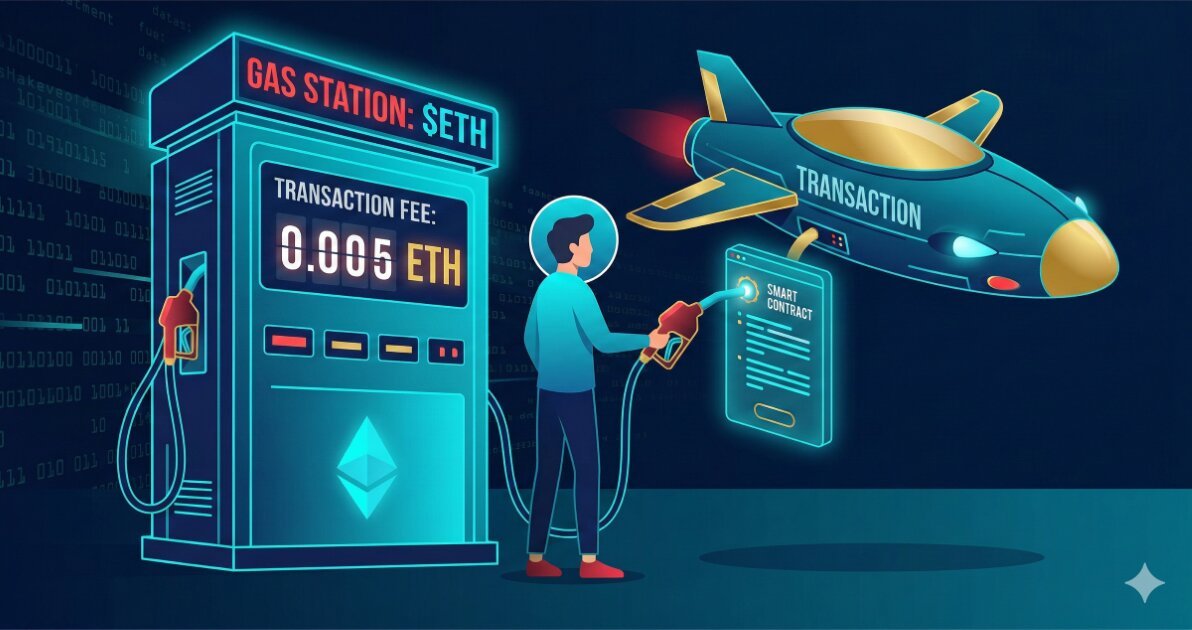
Gas costs add a per-transaction overhead on DEXs. Ethereum mainnet swaps can cost $5 to $50 in gas depending on network congestion and transaction complexity. Layer 2s like Arbitrum and Optimism reduce gas to under $1 for simple swaps. Alternative layer 1s like BSC or Polygon offer even lower gas but with different security trade offs.
Aggregators and Multi-Hop Routing
Swap aggregators query multiple liquidity sources and route your trade across the path offering the best net execution. 1inch, Matcha, and ParaSwap check both DEX pools and some on-chain liquidity sources, split large orders across multiple pools, and execute multi-hop routes (e.g., USDC to WETH to target token) when direct pairs lack liquidity.
The aggregator smart contract atomically executes all swap steps. If any step fails (insufficient liquidity, unexpected slippage, front running), the entire transaction reverts and you pay only gas. This prevents partial fills that leave you holding unwanted intermediary tokens.
CEX aggregators exist but are less common. Some platforms offer smart order routing that checks internal liquidity sources and external partner exchanges, though this typically happens within a walled garden of integrated platforms rather than across the entire CEX landscape.
Worked Example: Swapping 50,000 USDC for MATIC
You want to convert 50,000 USDC to MATIC. Start by checking execution quality across platforms.
On a CEX like Binance, you deposit USDC, navigate to the MATIC/USDC pair, and check the order book depth. Suppose the best ask is 0.8950 USDC per MATIC with 10,000 MATIC available, next levels at 0.8955, 0.8960. Your 50,000 USDC buys approximately 55,865 MATIC after consuming several levels. The platform charges 0.10% (50 USDC), netting you 55,809 MATIC, assuming you qualify for that fee tier.
On Uniswap v3 Polygon, check the USDC/MATIC pool. Suppose it holds $2M TVL with concentrated liquidity between 0.85 and 0.95 USDC per MATIC. The interface estimates 55,620 MATIC output for 50,000 USDC input (0.76% slippage from pool impact plus 0.05% fee). Gas costs 0.02 USDC equivalent.
Using 1inch on Polygon, the aggregator finds a better route: 40,000 USDC through the Uniswap pool and 10,000 USDC through a Quickswap pool, yielding 55,750 MATIC total. Net result after 0.05 USDC gas: 55,749 MATIC.
In this scenario, the CEX offers slightly better execution (55,809 vs. 55,749 MATIC), but requires deposit, withdrawal, and KYC. The DEX aggregator executes in one transaction from your wallet. If you already hold USDC on Polygon and want to avoid CEX custody, the 60 MATIC difference (roughly 0.1%) may be acceptable.
Common Mistakes and Misconfigurations
- Ignoring liquidity depth on DEXs. Checking quoted output on a $50 swap does not predict slippage on a $50,000 swap. Always simulate the actual trade size.
- Underestimating gas costs for small trades. A $10 Ethereum swap with $8 gas is 80% overhead. Use layer 2s or CEXs for small amounts.
- Setting excessive slippage tolerance. Some interfaces default to 3% or higher slippage. This allows frontrunning bots to extract the full tolerance amount. Set slippage to 0.5% or less unless trading extremely illiquid pairs, and monitor if the transaction reverts.
- Failing to verify token contract addresses. Scam tokens with identical tickers appear in DEX search results. Always confirm the contract address matches the official project contract.
- Assuming stablecoin pools have zero slippage. Curve and similar pools minimize slippage but do not eliminate it. Large trades or imbalanced pools (98% USDC, 2% DAI) still experience price impact.
- Depositing to CEXs without checking withdrawal status. Exchanges periodically suspend withdrawals for specific tokens during network upgrades or internal maintenance. Verify withdrawal functionality before depositing.
What to Verify Before You Rely on This
- Current fee tiers and volume requirements on your chosen CEX. Fee schedules change quarterly or when platforms adjust competitive positioning.
- Withdrawal fees and minimum amounts for specific tokens. Some CEXs charge flat withdrawal fees (e.g., 0.0005 BTC) that disproportionately affect small withdrawals.
- DEX pool TVL and recent volume for your target pair. Pools below $100k TVL often have poor execution quality.
- Smart contract audit status and age. Newly deployed DEX forks may not have undergone thorough security review.
- Layer 2 bridge reliability and liquidity if moving assets across chains. Some L2s have experienced bridge outages or delays during high congestion.
- Token listing status on CEXs. Not all tokens are available on all platforms, and new listings or delistings happen regularly.
- Current gas prices on Ethereum or your target chain. Gas costs fluctuate significantly and can exceed swap fees during network congestion.
- Slippage estimation accuracy. DEX interfaces show estimates based on current pool state but cannot guarantee execution price if the pool changes before your transaction confirms.
- Aggregator routing logic updates. Aggregators periodically add or remove liquidity sources, changing optimal routing for specific pairs.
Next Steps
- Simulate your typical trade sizes on both CEXs and DEXs using current liquidity conditions. Record net execution (output tokens minus all fees and gas) to establish baselines.
- Set up wallets on at least one major layer 2 (Arbitrum or Optimism) to access lower cost DEX swaps without sacrificing Ethereum security guarantees.
- Monitor execution quality over multiple trades. Track slippage, fees, and total cost to identify patterns and optimize platform selection for different token pairs and trade sizes.
Category: Crypto Exchanges